Choosing the Right Exterior Siding for Your New Home Building or Siding Replacement
Your home’s exterior does more than make a first impression — it protects everything inside. The right siding material can mean the difference between decades of ease and years of costly repairs. As a Home Builder and Exterior Remodeling contractor in Myrtle Beach, we meet many customers that have questions about exterior home finish options. In the write up, we will explore the most common types of home exteriors and will explain why so many people end up changing their wood siding to other products.
Hardie Plank
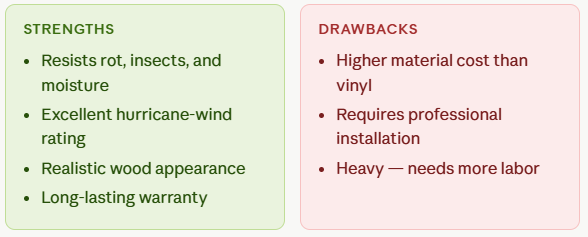
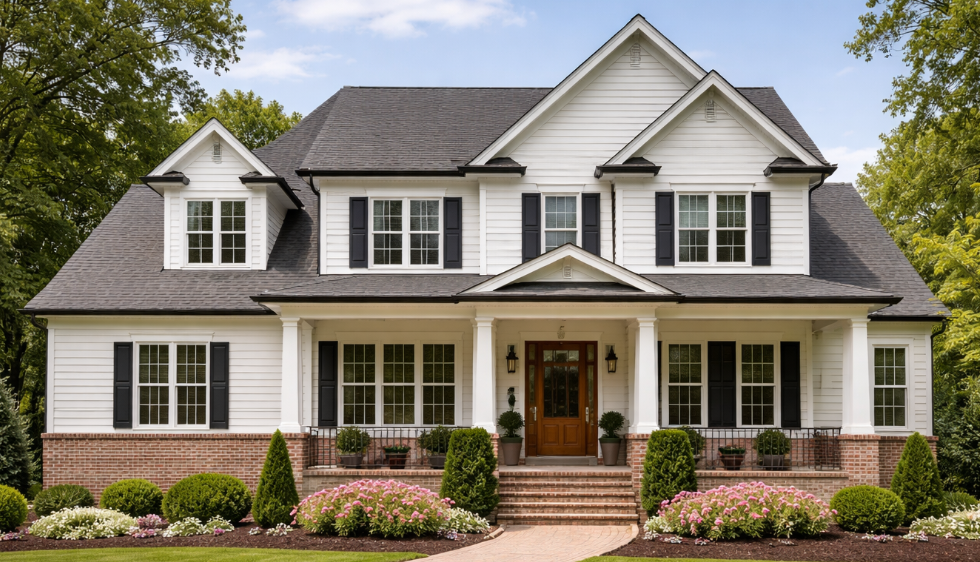
Hardie Plank, made by James Hardie, is a brand name of fiber cement board that has become one of the most popular siding choices in the country — and for good reason. It’s composed of cement, sand, and cellulose fiber, giving it the authentic look of wood without any of the vulnerabilities.
In warm, humid climates like the Southeast, Hardie Plank truly shines. It’s engineered specifically for regional weather extremes, rated to withstand winds up to 130 mph and resistant to warping, swelling, rot, and insects. It won’t absorb moisture like real wood, making it an excellent choice for coastal areas or regions with heavy summer rainfall.
It does require painting, but properly maintained Hardie Plank can last 50 years or more. Many manufacturers back it with a 30-year warranty, which speaks volumes about its longevity. One side note is that there are other manufacturers of fiber cement types of siding; however, Hardie is the most well known product.
Vinyl Siding
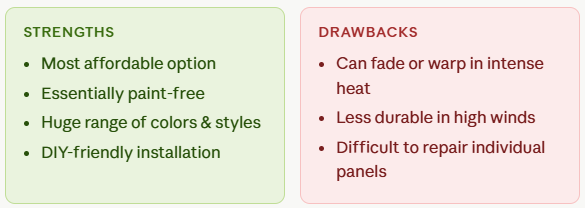
Vinyl siding is the most widely installed siding in the United States, and its popularity is easy to understand: it costs less than almost any other material, never needs painting, and requires almost no maintenance beyond an occasional rinse with a garden hose.
Modern vinyl has come a long way aesthetically. Today’s options include a wide variety of colors, textures, and profiles — including styles that convincingly mimic wood grain. Insulated vinyl, with a foam backing, can also help with energy efficiency.
There are trade-offs, however. Standard vinyl can crack in extreme cold, fade in prolonged direct sun, and may warp when exposed to intense heat near grills or fire pits. In hurricane-prone areas, lower-grade vinyl is more vulnerable than fiber cement. Choosing a thicker gauge and a wind-rated product is essential in coastal Southern markets.
Brick
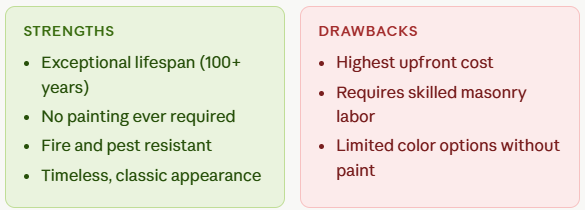
Brick is arguably the most enduring building material in human history — and for good reason. A properly built brick exterior can last well over 100 years with minimal intervention. It doesn’t rot, it doesn’t burn, and insects can’t eat through it. It’s also an excellent thermal mass material, helping moderate interior temperatures in both summer and winter.
In the South, brick has long been a hallmark of quality construction. It handles humidity exceptionally well and doesn’t require paint or stain. Many historic Southern homes feature brick facades that remain structurally sound after a century of hot summers and tropical storms.
The main barrier is cost. Full brick construction is significantly more expensive than other options and requires skilled masonry labor. However, brick veneer — a single layer of brick applied over a wood or steel frame — offers a middle ground that delivers the look and much of the durability at a lower price point. Due to the durability of brick, a homeowner’s insurance company may even provide a discount for a mainly brick exterior house.
Stucco
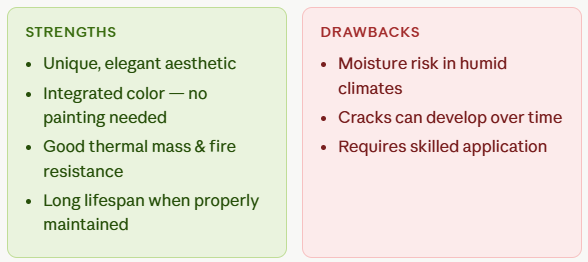
Stucco is a plaster-like material applied in multiple coats over a wire lath or mesh. Common in Mediterranean, Spanish, and Southwest architectural styles, stucco gives homes a smooth or textured finish and can be tinted virtually any color during the mixing process — eliminating the need to paint the surface.
Traditional stucco is made from Portland cement, sand, and water. It’s hard, breathable, and fire-resistant. When properly applied and sealed, it handles heat well and offers good insulation value.
However, stucco can be problematic in high-humidity environments. In regions like the Gulf Coast or Carolinas, stucco that isn’t properly sealed or maintained can absorb moisture, leading to cracking, water intrusion, and mold behind the walls. This is especially true of the more modern EIFS (Exterior Insulation and Finish System), sometimes called synthetic stucco, which has had well-documented moisture problems in humid climates.
If stucco is your choice in the South, work with a contractor experienced in humid-climate application and ensure a robust drainage plane is installed behind the product.
Why Wood Siding Falls Short in the South
Traditional wood siding — whether cedar, pine, or redwood — has undeniable charm. But in Southern states, from the Carolinas down through Florida and across to Texas, it faces a punishing combination of threats that make it a difficult long-term choice.
The region’s heat and humidity create ideal conditions for wood rot, and the wet-dry seasonal cycles cause wood to constantly expand and contract — cracking paint and opening seams to moisture intrusion. Perhaps most critically, the South is home to the most aggressive termite populations in the nation. The Formosan termite, prevalent throughout coastal areas, can devastate untreated wood framing in just a few years.
Wood siding also requires repainting every 5–7 years at minimum, along with regular caulking, sealing, and inspection. In a region where the outdoor environment never truly gives your home a break, that maintenance burden compounds quickly. For homeowners in Myrtle Beach, Charleston, Savannah, or similar humid coastal communities, materials like fiber cement or brick will deliver far greater value and peace of mind over time.
Every siding material has its ideal context. For most Southern homeowners looking for the best balance of durability, aesthetics, and long-term value, Hardie Plank fiber cement leads the pack. Brick is the ultimate investment if budget allows. Vinyl is the practical budget choice — just select a wind-rated, thicker product. And while stucco can work, it demands extra care and expert installation in humid climates. Whatever you choose, wood siding alone is rarely the right answer below the Mason-Dixon line.
Rob Clemons, Owner and President of Carolina Bays Homes is a licensed home builder in Myrtle Beach, South Carolina. Carolina Bays does everything from home building to large remodeling, sunrooms and exterior siding replacement. For more information, please reach out to Carolina Bays here.