
Roof Addition Showdown: Conventional Wood Framing vs. SIP Panels
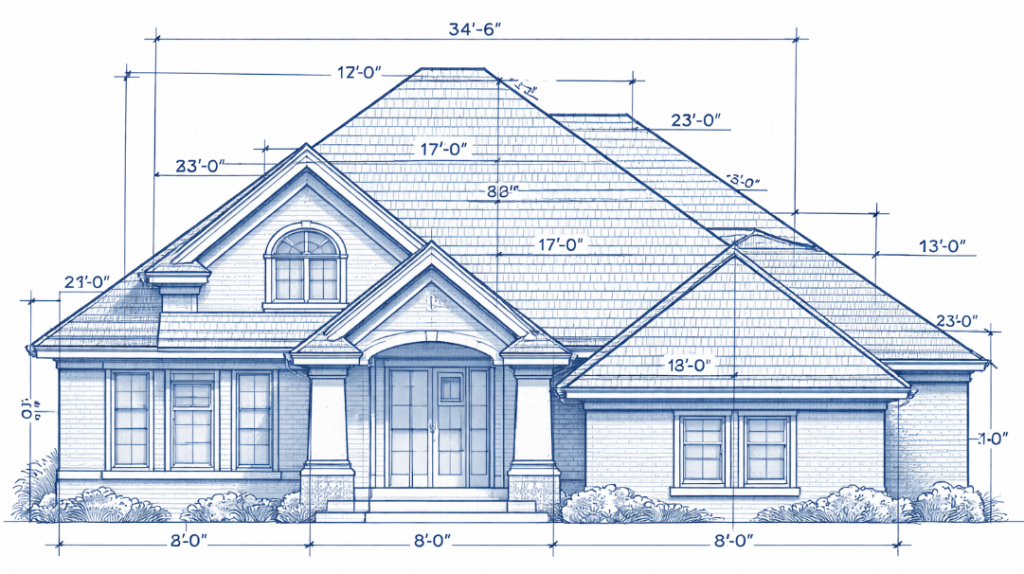
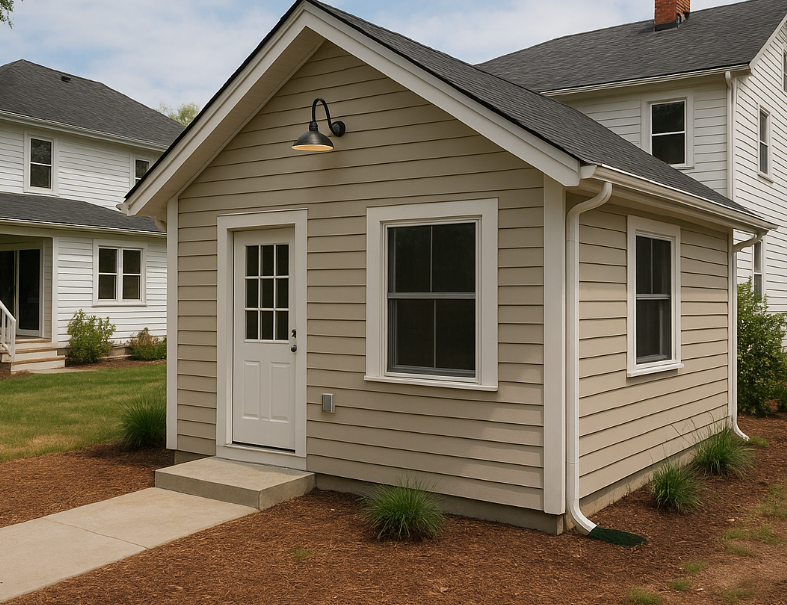
One of the most popular remodeling projects is the addition of new square footage to your home. Whether adding a sunroom, a new living area, a bedroom or even a simple porch, adding this room to your home can improve your life in many ways. When planning a roof addition to your home, one of the most important decisions you’ll face is choosing between conventional wood framing and Structural Insulated Panels (SIPs). Both methods have their merits, and understanding the pros and cons of each can help you make the best choice for your project, budget, and long-term goals.
What Are SIP Panels?
Before diving into the comparison, let’s clarify what SIP panels are. Structural Insulated Panels consist of an insulating foam core sandwiched between two structural facings, typically a heavy gauge aluminum or oriented strand board (OSB). These prefabricated panels serve as both the structure and insulation in one integrated system.
Conventional Wood Framing Pros
Aesthetics: Building with a wood framed roof gives more of a chance of making the roof look like part of the existing home. As opposed to SIP panels which deviate from a conventional framing and can appear to be an add-on – a stick framed roof can perfectly match features and roof styles.
Familiarity and Availability: Conventional framing is the standard construction method in most regions. Nearly every contractor knows how to work with it, making it easy to find qualified labor. Materials are readily available at any lumber yard or home improvement store.
Flexibility for Changes: If you need to make modifications during construction or add electrical outlets, plumbing, or HVAC runs later, wood framing offers more flexibility. You can easily access the wall and roof cavities without compromising structural integrity.
Lower Upfront Material Costs: In many markets, the raw materials for conventional framing are less expensive than SIP panels. If you’re working with a tight budget, this can be a significant advantage.
Design Adaptability: Conventional framing accommodates complex architectural features, irregular angles, and custom designs more easily. If your roof addition has unique design elements, traditional framing may be simpler to execute.
Cons
Labor-Intensive: Framing requires more on-site labor and time. Builders must cut, assemble, and install each piece individually, then add separate insulation, sheathing, and vapor barriers.
Weather Dependent: Construction can be significantly delayed by rain, snow, or extreme temperatures since the building isn’t weatherproof until roofing and sheathing are complete.
Quality Variability: The final result depends heavily on the skill of the framing crew. Inconsistent installation of insulation or air sealing can lead to cold spots, drafts, and moisture problems.
SIP Panel Roof Systems Pros
Superior Energy Efficiency: SIP panels provide exceptional insulation with minimal thermal bridging. Some continuous foam cores create R-values of R-23 to R-40 or higher, depending on thickness. This translates to lower heating and cooling costs and a more comfortable living space.
Faster Installation: Since panels arrive pre-cut and ready to install, a SIP roof can often be erected in days rather than weeks. This speed reduces labor costs and gets your addition weatherproof quickly.
Excellent Air Sealing: When properly installed with appropriate tapes and sealants, SIP roofs create an exceptionally tight building envelope. This minimizes air leakage, improving energy efficiency and indoor air quality.
Structural Strength: SIP panels are remarkably strong and can span longer distances than conventional rafters, potentially eliminating the need for some support beams and creating more open interior spaces.
Consistent Quality: Because panels are manufactured in a controlled factory environment, you get consistent quality and fewer installation errors compared to site-built framing.
Cons
Higher Initial Cost: SIP panels typically cost more upfront than conventional framing materials. While you may save on labor and energy bills over time, the initial investment is steeper.
Specialized Installation: Not all contractors are experienced with SIP installation. You’ll need to find a builder familiar with the system, which may limit your options or increase costs in some areas.
Less Flexibility for Changes: Once installed, making modifications to a SIP roof is more challenging. Running new electrical or plumbing lines through the panels requires careful planning and execution to avoid compromising the insulation and air barrier.
Longer Lead Times: Since SIP panels are custom-manufactured for your project, there can be significant lead time between ordering and delivery. This requires careful planning and can delay project starts.
Moisture Concerns: If SIP panels with OSB (instead of aluminum) get wet during shipping, storage, or installation, the OSB facings can swell or the foam can be damaged. Proper handling and weather protection are essential.
The Bottom Line
Both conventional wood framing and SIP panels can create excellent roof additions. Conventional framing offers flexibility, familiarity, and lower initial costs, while SIP panels provide superior energy performance, faster installation, and consistent quality. Consider your budget, timeline, energy goals, and local contractor expertise when making your decision.
Whichever method you choose, working with experienced professionals and ensuring proper installation will be key to a successful roof addition that serves your home well for decades to come.
Carolina Bays is a remodeling contractor in Myrtle Beach, South Carolina specializing in additions and other large remodeling projects. Please let us know if you have any other thoughts about additions or questions at the following link.