Five Iconic Homes That Changed Architecture Forever
Architecture has evolved a lot over the last 100 years – yet timeless designs are immortalized through their creativity and innovativeness. Over my career in construction, I’ve often thought about how fascinating this industry is. There are thousands of details, hundreds of people and countless hours of planning that go into every home. Whether you are building a custom home in Myrtle Beach with Carolina Bays or building a skyscraper in New York City, there is always a goal to make something with great form (the look), function (the way it flows) and at a price that the end user can afford. Great architecture should be appreciated due to its importance not just due to its need within a construction project but because long after, it will continue to affect the way we live our lives every day. With this in mind, I wanted to pay a respect to modern architecture my listing five iconic residences that left an indelible mark on the world of architecture.
11. Fallingwater (1935) – Mill Run, Pennsylvania
Designed by Frank Lloyd Wright for the Kaufmann family, Fallingwater is perhaps the most celebrated residential design of the 20th century. This masterpiece of organic architecture appears to defy gravity as its cantilevered terraces extend dramatically over a waterfall on Bear Run.
Wright’s vision was revolutionary: rather than building near the waterfall where the family could view it, he integrated the house directly into the landscape, placing it over the cascade itself. The home’s horizontal lines echo the surrounding rock ledges, while its use of local stone and innovative cantilevers created a seamless dialogue between structure and nature. Fallingwater demonstrated that modern architecture could exist in harmony with the natural world rather than dominating it.
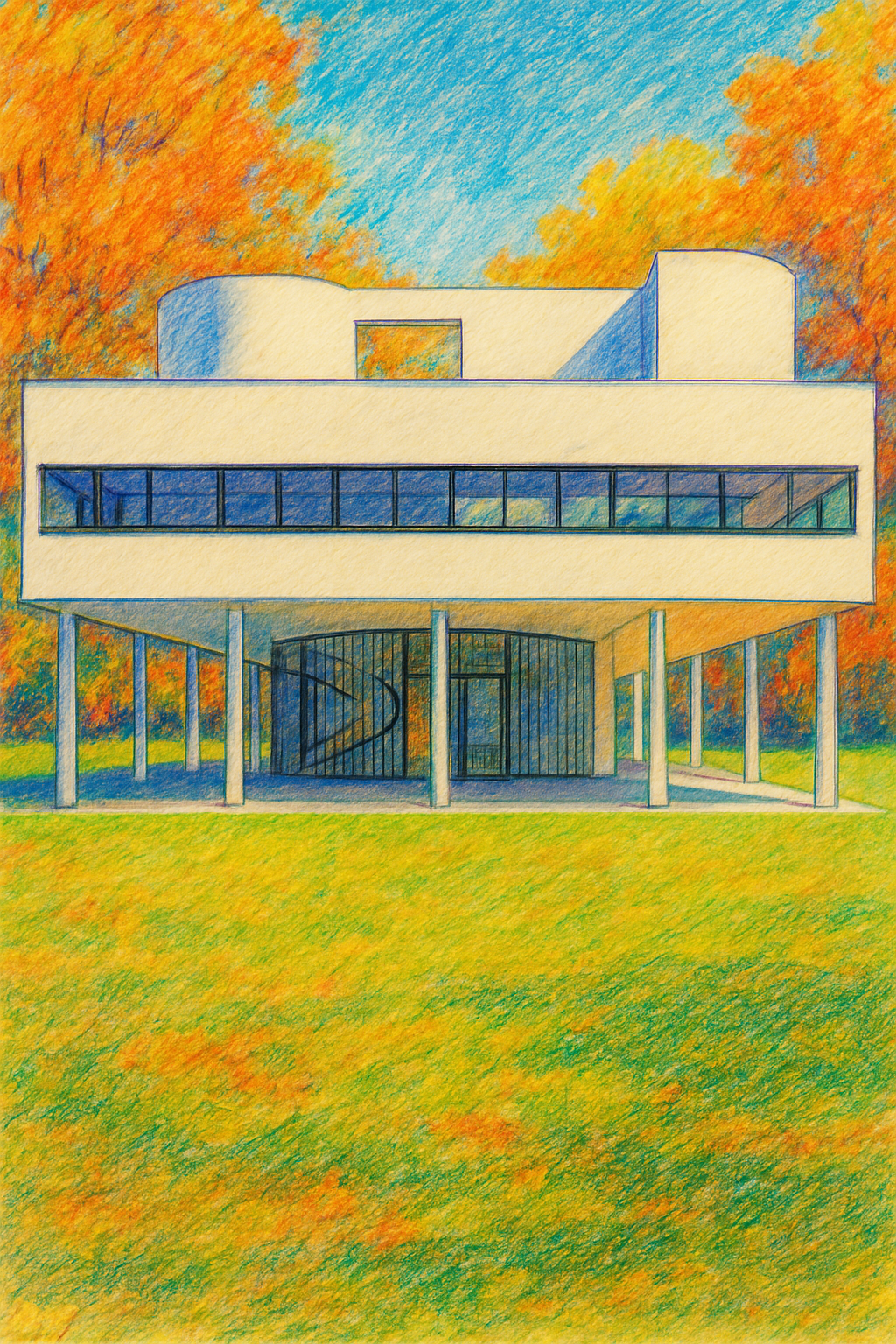
2. Villa Savoye (1931) – Poissy, France
Le Corbusier’s Villa Savoye stands as the ultimate expression of his “Five Points of Architecture”—pilotis (supporting columns), flat roof terrace, free floor plan, horizontal windows, and free facade. This white modernist box elevated on slender columns revolutionized how architects thought about residential design.
The villa’s geometric purity and ribbon windows created a machine-age aesthetic that influenced countless modern homes. Its pilotis freed the ground floor, allowing the landscape to flow beneath the structure, while the roof terrace transformed an often-wasted space into usable living area. Villa Savoye proved that a home could be both a functional living space and a manifesto for a new way of building.
3. Farnsworth House (1951) – Plano, Illinois
Ludwig Mies van der Rohe’s Farnsworth House took minimalism to its ultimate conclusion. This single-room weekend retreat consists of nothing more than a transparent glass box suspended between two horizontal planes—the floor and roof—supported by eight white steel columns.
The radical transparency of the design dissolved the boundaries between interior and exterior, making the surrounding Illinois landscape an integral part of the living experience. While controversial during its time (the client sued Mies over cost overruns), the Farnsworth House became a template for glass-box modernism and influenced everything from mid-century corporate architecture to contemporary luxury homes. Its “less is more” philosophy demonstrated that profound beauty could emerge from extreme simplicity.
4. Case Study House #22 (Stahl House) (1960) – Los Angeles, California
Perched on a hillside in the Hollywood Hills, Pierre Koenig’s Case Study House #22 epitomizes Southern California modernism. The home’s most famous feature is its L-shaped floor plan, which creates a cantilevered living room that seems to float above Los Angeles, with floor-to-ceiling glass walls offering panoramic views of the city below.
As part of the Case Study House program, which challenged architects to design innovative, affordable homes for postwar America, the Stahl House showed that modern design could be both practical and poetic. Its clean steel frame, open plan, and integration of indoor-outdoor living became hallmarks of California modernism and influenced residential design across the United States.
5. Glass House (1949) – New Canaan, Connecticut
Philip Johnson’s Glass House is a study in contradictions—utterly transparent yet intensely private, minimal yet richly detailed. The 32-by-56-foot pavilion features walls made entirely of glass, with only a brick cylinder containing the bathroom interrupting the open space.
Johnson, inspired by Mies van der Rohe’s work, created a home that was as much about viewing the surrounding landscape as about being viewed within it. The house’s transparent walls make the changing seasons and shifting daylight integral to the living experience. Positioned carefully on its 47-acre estate with strategic views and screening, the Glass House demonstrated how a seemingly exposed structure could still offer privacy and intimacy through thoughtful site planning. The Enduring Legacy
These five homes share common threads: they challenged conventional thinking about what a house should be, they engaged deeply with their sites and surroundings, and they demonstrated that residential architecture could be both livable and revolutionary. Each became a teaching tool, showing architects and the public that homes could be laboratories for new ideas about space, materials, and our relationship with nature.
Today, these buildings continue to inspire. They remind us that great architecture isn’t about following trends but about asking fundamental questions: How should we live? What is the relationship between shelter and landscape? How much do we really need? Their answers, expressed in glass, steel, stone, and concrete, continue to resonate more than half a century after their creation.
These are just five interesting homes – if any of the readers would like to share their favorite designs, please let us know here and we will feature your home on an upcoming post.
Author, Rob Clemons is a Certified Master Builder, Commercially licensed GC and Residential Home Builder in Myrtle Beach South Carolina. He has been featured in Pro Builder magazine and does public speaking about leadership.